The Complete Guide to Chinese Lanterns: From Thousands of Years of Culture and Traditional Festivals to Modern Manufacturing
Introduction: Why Can a Single Lantern Represent Chinese Culture?
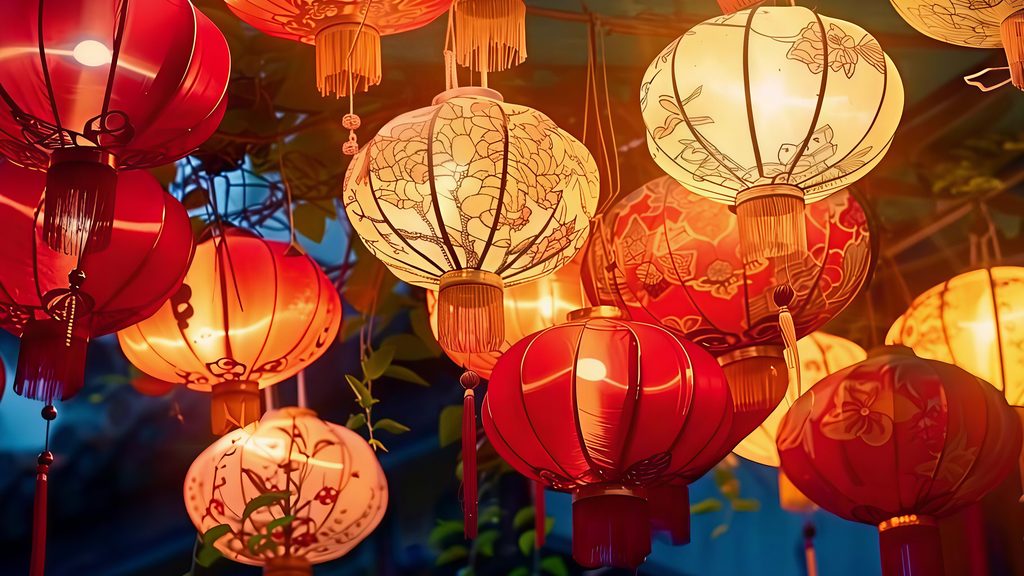
If you visit China for the first time and happen to arrive during the Chinese New Year or Lantern Festival, you will probably encounter a remarkable sight: streets lined with red lanterns, golden lantern decorations hanging beneath the eaves of historic buildings, shops and restaurants adorned with festive lanterns, and parks filled with spectacular lantern displays. When night falls and thousands of lanterns illuminate the surroundings, entire streets and cities seem to glow with warm light.
Some lanterns are small enough to fit in the palm of your hand and can be hung outside a home. Others are handmade from silk, bamboo, and wood, showcasing traditional craftsmanship. Still others stand dozens of meters tall, depicting dragons, phoenixes, flowers, animals, or mythical stories, becoming the visual centerpiece of large-scale festivals.
All of these may be called Chinese lanterns, but the culture, craftsmanship, and manufacturing capabilities behind them are far richer than their appearance alone suggests.
In China, lanterns are not merely lighting devices or decorative objects. They are closely connected to family values, festival customs, auspicious symbolism, traditional aesthetics, folk art, and everyday life. At the same time, China has developed a mature lantern manufacturing industry capable of combining traditional handicrafts with modern materials, LED lighting, digital design, and large-scale event engineering. Today, Chinese manufacturers can produce everything from handmade traditional lanterns to complete lantern installations for homes, commercial spaces, festivals, and international events.
To truly understand Chinese lanterns, we can begin with a few questions:
- How did Chinese lanterns originate?
- Why are red lanterns so important in China?
- Why are lanterns closely associated with the Chinese New Year and Lantern Festival?
- What do dragons, phoenixes, fish, lotus flowers, and Chinese characters on lanterns represent?
- Why do Chinese people write riddles on lanterns and hold lantern-riddle guessing activities?
- What types of Chinese lanterns exist, and how are they made?
- Why can China manufacture everything from traditional handmade lanterns to large-scale lantern festival installations?
- How should foreign consumers, businesses, and event organizers select, purchase, and use Chinese lanterns?
This article explores Chinese lanterns from the perspectives of culture, history, folk traditions, art, manufacturing techniques, and practical applications.
Part One: What Are Chinese Lanterns?
1. The Basic Definition of a Chinese Lantern
Chinese lanterns are an important part of traditional Chinese lantern art. They generally consist of a frame, an outer covering, a light source, and decorative elements.
Traditional lantern frames may be made from bamboo, wood, metal wire, or other materials. The exterior may be covered with paper, silk, fabric, or similar materials. In earlier times, lanterns commonly used candles or oil lamps as light sources. Modern lanterns, by contrast, frequently use LED lights, LED strips, and other electrical lighting systems.
A typical traditional Chinese lantern may contain the following components:
- Frame: Determines the lantern’s shape, size, and overall structure.
- Outer covering: May consist of paper, silk, fabric, plastic, or other suitable materials.
- Light source: May use a traditional flame or modern electric lighting or LEDs.
- Decorative patterns: Include auspicious motifs, flowers and birds, animals, calligraphy, and traditional designs.
- Tassels and hanging ornaments: Add decorative detail. Some traditional lanterns feature long tassels, decorative knots, and other ornaments.
- Hanging or mounting structure: Allows the lantern to be suspended beneath eaves, at entrances, from indoor ceilings, on display frames, or in other locations.
Not all Chinese lanterns have the same structure. Lanterns from different regions, historical periods, and usage contexts can vary considerably in their materials, manufacturing methods, shapes, and decorative styles.
For example, a small red lantern used for Chinese New Year decorations at home may be designed primarily to be lightweight and easy to hang. A traditional palace lantern may place greater emphasis on wooden construction, carving, painting, and intricate decoration. A large dragon-shaped lantern installation at a festival may combine a metal structure, fabric, LED lighting, and a complex electrical system.
Chinese lanterns are therefore not a single product type. They represent a broad family of products incorporating traditional craftsmanship and modern manufacturing technology.
2. How Are Chinese Lanterns Different from Ordinary Decorative Lights?
From a modern product perspective, Chinese lanterns and ordinary decorative lights overlap in some ways. Both can be used for lighting, decoration, and creating an atmosphere. However, traditional Chinese lanterns often carry more distinctive cultural symbolism.
The design of an ordinary decorative light may focus primarily on color, brightness, shape, and spatial effect.
In addition to these features, a Chinese lantern may communicate specific cultural messages through its color, patterns, Chinese characters, and intended occasion.
For example:
- Red lanterns are often associated with celebration, good fortune, and festivals.
- A lantern decorated with fish may symbolize abundance and prosperity.
- A lantern featuring a dragon or phoenix may express traditional ideas of prestige, auspiciousness, and good wishes.
- A lantern bearing the Chinese character “福” (blessing or good fortune) is commonly used to express hopes for happiness and luck.
- Lanterns associated with the Lantern Festival may also become part of riddle-guessing activities, lantern viewing, and social gatherings.
This means that a Chinese lantern can be both a commercial product and a form of cultural expression.
For foreign consumers, this distinction is important. When choosing a Chinese lantern, you are not simply selecting a decorative item. You may also be choosing a visual symbol with a particular cultural meaning.
Part Two: The History of Chinese Lanterns — From Practical Lighting to Cultural Symbol
1. How Did Chinese Lanterns Originate?
The development of Chinese lanterns is closely connected to lighting technology, handicrafts, urban life, and festival traditions.
Before electric lighting became available, people relied on fire for illumination. In China, oil lamps, candles, and other forms of flame-based lighting were used for centuries. To protect flames, reduce the effects of wind, and make light sources easier to carry or suspend, people gradually developed different types of lamps and protective structures.
Advances in papermaking, silk production, bamboo processing, woodworking, and metalworking helped create the conditions for the development of traditional Chinese lanterns.
It is important to note, however, that Chinese lanterns did not suddenly appear in a single year. Different types of lamps evolved over long periods, while the paper lanterns, palace lanterns, and festival lanterns familiar today developed gradually during different historical periods.
Early lighting devices served practical purposes. As daily life and handicrafts developed, people began to pay greater attention to their appearance, decoration, and symbolic meanings.
Lanterns gradually acquired several identities:
- Lighting tools for everyday life.
- Decorations for festivals.
- Decorative lighting fixtures in palaces, temples, and important buildings.
- Auspicious objects for weddings, birthday celebrations, and other ceremonies.
- Carriers of folk art and traditional craftsmanship.
Chinese lantern culture did not emerge from a single cause. It developed through the long-term interaction of practical technology, folk beliefs, festival activities, and aesthetic traditions.
2. Why Did Lanterns Become Cultural Symbols Rather Than Just Lighting Tools?
When an object appears repeatedly in important life events, it can gradually acquire meanings beyond its original function.
For example, in Western cultures, a Christmas tree is not simply a tree. It can also represent family gatherings, holiday celebrations, and religious traditions.
Similarly, Chinese lanterns are used not only for lighting but also during the Chinese New Year, Lantern Festival, weddings, temple fairs, grand openings, and other important occasions.
As generations continued to use lanterns during these events, lanterns became associated with celebration, family reunion, blessings, and a festive atmosphere.
In particular, red lanterns gradually became recognizable symbols of traditional Chinese celebrations through long-standing folk practices and visual traditions.
Today, even when a red lantern uses modern LED lighting and industrially manufactured materials, it can still retain a strong Chinese cultural identity.
This is one way traditional culture continues to evolve: technology and materials may change, while certain visual forms and symbolic meanings endure.
3. Chinese Lanterns and Traditional Urban Life
In traditional Chinese society, lanterns were not confined to homes.
They could also be found along streets, outside shops and restaurants, in courtyards, temples, palaces, and public gathering places.
Before modern electric lighting, lanterns had considerable practical value. They could be hung, carried, or placed in specific locations to provide light and make nighttime activities more convenient.
At the same time, lanterns could communicate the character of a place.
A carefully decorated courtyard, a shop displaying red lanterns during a festival, or a building adorned with lantern decorations for a celebration could all create a distinctive atmosphere through light and ornamentation.
As festival lantern displays developed, lanterns gradually expanded beyond individual lighting fixtures. They could be combined with architecture, gardens, people, animals, and stories to create larger works of lantern art.
This development helped establish the cultural and artistic foundations of modern Chinese lantern festivals.
Part Three: The Most Important Cultural Meanings of Chinese Lanterns
1. Light: A Hope for a Better Life
Light is an important starting point for understanding Chinese lantern culture.
In traditional society, lamplight helped dispel darkness and provide illumination. Beyond its practical value, it could also evoke hope, warmth, safety, and the continuation of life.
Therefore, when lanterns are used during the Chinese New Year, Lantern Festival, or other celebrations, they do more than brighten the surroundings. They also create a warm, positive atmosphere.
Lighting a lantern can be understood as welcoming a new moment with light and expressing good wishes for the future.
This meaning does not necessarily come from a single fixed ancient rule. Rather, it developed gradually through everyday life, festival customs, and folk aesthetics.
For foreign readers, it can be understood as a universal human emotion expressed through a traditional Chinese object.
2. Red: Why Are Chinese Lanterns So Often Red?
Red is one of the most recognizable colors in traditional Chinese festival culture.
Red is closely associated with celebration, happiness, and positive wishes in Chinese daily life.
During the Chinese New Year, red appears in lanterns, Spring Festival couplets, paper-cut decorations, red envelopes, and many other festive objects.
For several reasons, red lanterns have become widely popular.
Red Represents Celebration
In Chinese culture, red is often associated with festivals, ceremonies, excitement, and positive emotions.
When red lanterns appear along streets, outside shops, or at home entrances, people can quickly recognize that a festival is being celebrated or that good wishes are being expressed.
Red Is Associated with Good Fortune
Traditional Chinese culture places considerable importance on auspicious symbolism. Red lanterns are frequently used to express hopes for happiness, success, peace, and a better life.
This does not mean that every red lantern must carry one rigidly defined meaning. Interpretations can vary across regions, families, and occasions.
Red Creates a Strong Visual Effect
From a design perspective, red has a powerful visual presence.
When red lanterns are combined with gold decorations, dark rooflines, nighttime surroundings, and warm lighting, they create a striking visual effect.
This is another reason red lanterns are well suited to festive streets, commercial spaces, and large-scale events.
Red Lanterns Are Also Cultural Recognition Symbols
Today, red lanterns are familiar visual symbols of Chinese culture in many cities around the world, including Chinese restaurants, Lunar New Year celebrations, Chinatowns, and cultural events.
Even people who know little about Chinese history can often recognize the association between red lanterns and traditional Chinese festivals.
Red lanterns are therefore both traditional decorations and recognizable visual elements in the international presentation of Chinese culture.
3. Family Reunion: Why Are Lanterns Associated with Family?
Traditional Chinese culture places great importance on family relationships.
The Chinese New Year is one of China’s most important traditional festivals and an important time for family reunions. Many people return home to have a reunion dinner, exchange New Year greetings, and visit relatives and friends while expressing their hopes for the coming year.
The Lantern Festival takes place during the early part of the lunar new year celebrations, usually on the fifteenth day of the first lunar month. It is known for lantern viewing, eating yuanxiao or tangyuan, and guessing lantern riddles.
During these festivals, lanterns may decorate homes, courtyards, streets, and public spaces.
A lantern hanging outside a home does not necessarily symbolize “family reunion” in a strict or universal sense. However, when it appears in a festive setting where family members gather, it can naturally become associated with the warmth of home, the arrival of a holiday, and hopes for a better life.
This meaning comes from the context in which the lantern is used and the emotions people associate with it, not simply from its shape.
4. Auspiciousness: Why Are Chinese Lanterns Often Decorated with Gold?
Traditional Chinese decorations frequently use patterns to express blessings and good wishes.
Gold decorations are especially common on lanterns because gold can evoke preciousness, abundance, dignity, and visual richness.
When gold is combined with red, it creates a strong color contrast and fits the aesthetic traditions of many Chinese festive decorations.
Patterns on lanterns may include:
- Dragons and phoenixes.
- Carp and other fish.
- Lotus flowers, peonies, and plum blossoms.
- Auspicious clouds, landscapes, and traditional motifs.
- Chinese characters such as “福” (blessing), “寿” (longevity), and “喜” (happiness).
- Animals from the Chinese zodiac.
- Characters and scenes from traditional Chinese stories.
These patterns are not merely decorative elements used to fill the surface of a lantern. They may also communicate blessings, express identity, reflect regional styles, or tell cultural stories.
However, patterns should be interpreted in their specific context. The same animal or flower may have different meanings in different traditions, artworks, and settings.
Part Four: What Do the Patterns on Chinese Lanterns Represent?
1. The Dragon: Power, Prestige, and Auspiciousness
The dragon is one of the most important mythical figures in traditional Chinese culture.
Unlike certain dragons in Western stories that often appear as enemies or dangerous creatures, the Chinese dragon generally has a more complex symbolic role. It is associated with power, authority, auspiciousness, transformation, and the forces of nature.
Dragons have long appeared in Chinese art, architecture, clothing, festivals, and folk performances.
When a dragon is used to decorate a lantern, it can enhance the visual impact and give the work a distinctive traditional Chinese character.
At large lantern festivals, dragons often become independent lantern installations. Designers may create a giant illuminated dragon that coils around buildings, stretches through lantern corridors, or connects with other lantern displays to form a continuous scene.
2. The Phoenix: Elegance, Auspiciousness, and Good Wishes
The phoenix is another important mythical bird in traditional Chinese culture.
It is often associated with nobility, auspiciousness, beauty, and harmony. In traditional art, it frequently appears alongside dragons, flowers, and other auspicious motifs.
Phoenix lanterns often feature elaborate feather patterns and highly decorative designs.
In some wedding decorations, festivals, and large-scale lantern displays, the phoenix can be used to convey elegance, splendor, and the beauty of traditional art.
3. Fish: Abundance, Harvest, and “Surplus Year After Year”
Fish are common motifs in traditional Chinese auspicious art.
One important reason is that the Chinese word for “fish,” yú (鱼), sounds the same as the word for “surplus” or “remaining abundance,” also pronounced yú (余).
Because of this linguistic association, fish are often used to express wishes for abundance, prosperity, and a comfortable life.
For example, “年年有余” (nián nián yǒu yú) is a familiar Chinese blessing that expresses the hope of having something left over and enjoying abundance every year.
Fish-shaped lanterns, lanterns decorated with fish, and festival decorations featuring fish are therefore popular choices for homes, businesses, and celebrations.
4. The Lotus Flower: Purity, Elegance, and Traditional Aesthetics
The lotus has a long history in Chinese culture and art.
It frequently appears in painting, sculpture, architecture, ceramics, and various traditional crafts.
Lotus lanterns may feature layered three-dimensional petals or lotus patterns created through painting, paper-cutting, or other decorative techniques.
Because of its distinctive and graceful shape, the lotus is also well suited to large-scale lantern installations.
5. The Peony: Wealth and Prosperity
In traditional Chinese culture, the peony is often associated with wealth, prosperity, and splendor.
Its full blossoms and layered petals make it a popular decorative motif.
On lanterns, peonies may be represented through embroidery, painting, printing, cutouts, or three-dimensional decorations.
For people seeking a luxurious, festive, or traditionally Chinese decorative style, the peony is a common choice.
6. Plum Blossoms: Resilience and Vitality
Plum blossoms can bloom during cold weather, so they are often associated with resilience, integrity, and vitality in Chinese literature and art.
Plum blossom lanterns may feature simple branches and flowers, or combine the motif with poetry, landscapes, and other traditional patterns.
Compared with the rich colors and full blossoms of peonies, plum blossom designs can sometimes convey a more restrained and elegant aesthetic.
7. Auspicious Clouds: Symbols of Good Fortune
Auspicious clouds are common motifs in traditional Chinese art.
They appear in architecture, clothing, painting, carving, and lantern decoration.
Cloud patterns can fill visual space, make a composition more cohesive, and create a traditional Chinese decorative style.
In large-scale lantern displays, cloud motifs may also serve as background elements that connect dragons, phoenixes, figures, buildings, and other subjects.
8. Chinese Characters: Writing Blessings Directly on Lanterns
Chinese lanterns often feature Chinese characters.
Common examples include:
| Chinese Character | Pinyin | Common Meaning |
|---|---|---|
| 福 | Fú | Blessing, happiness, good fortune |
| 寿 | Shòu | Longevity |
| 喜 | Xǐ | Joy, happiness, celebration |
| 囍 | Shuāngxǐ | Double happiness, often used for weddings |
| 吉 | Jí | Good fortune, auspiciousness |
| 财 | Cái | Wealth |
| 春 | Chūn | Spring, the new year |
| 安 | Ān | Peace, safety, stability |
For foreign consumers, lanterns featuring Chinese characters are particularly interesting.
If you want a lantern to convey not only a Chinese aesthetic but also a specific blessing, you can choose characters appropriate to the occasion.
For example, “福” or “春” can be used for Chinese New Year decorations; “喜” or “囍” can be used for weddings; and “寿” can be used for birthday celebrations honoring longevity.
However, the visual presentation of Chinese characters requires attention to writing direction, font style, and character accuracy. For customized orders, the design should be confirmed before production to avoid mistakes.
9. The Chinese Zodiac: Cultural Symbols Connected to Lunar Years
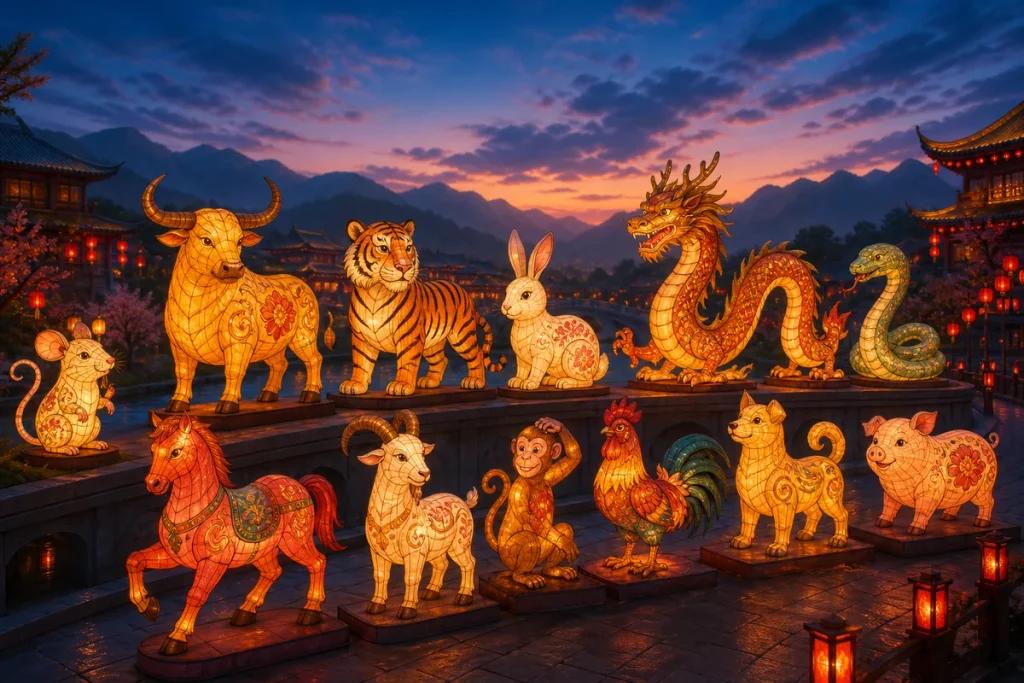
The traditional Chinese zodiac consists of twelve animals:
Rat, Ox, Tiger, Rabbit, Dragon, Snake, Horse, Goat, Monkey, Rooster, Dog, and Pig.
The zodiac is closely connected to traditional year naming, folk stories, and festival culture.
During the Chinese New Year, lantern manufacturers often create products themed around the animal associated with that year.
For example, particular years may inspire dragon-shaped, snake-shaped, horse-shaped, or other zodiac lanterns. These products can be used as home decorations, shopping mall displays, school cultural activities, city celebrations, and themed lantern festivals.
Zodiac lanterns have the advantage of clear themes and easily recognizable visual forms. They are also well suited to new designs released each year.
Part Five: Chinese Lanterns and Traditional Festivals
One of the most representative uses of Chinese lanterns is during traditional Chinese festivals.
The Chinese New Year and Lantern Festival are especially important, but lanterns also appear at weddings, temple fairs, regional festivals, and various celebrations.
1. Chinese New Year: Red Lanterns Welcome the New Year
The Chinese New Year is generally regarded as China’s most important traditional festival.
Centered on the beginning of the lunar year, it is a time when many families clean and decorate their homes, prepare festive food, and visit relatives and friends.
Red lanterns are among the most common decorations during this period.
People may hang lanterns at:
- The entrances of homes.
- Courtyards and balconies.
- Shop and restaurant entrances.
- Office buildings and commercial streets.
- Parks, squares, and tourist attractions.
- Traditional buildings and festival venues.
Chinese New Year lanterns generally emphasize red and gold, auspicious patterns, and a festive atmosphere.
However, decorating customs vary among families and regions. Not every Chinese household hangs lanterns, and not all Chinese New Year lanterns use the same designs.
For foreign consumers who want to create a Chinese New Year atmosphere in their homes, restaurants, or commercial spaces, red lanterns are a recognizable and relatively easy-to-coordinate decorative choice.
2. The Lantern Festival: One of the Most Representative Festivals of Lantern Culture
The Lantern Festival is celebrated on the fifteenth day of the first lunar month and is generally regarded as an important milestone in the Chinese New Year celebration period.
Its most representative activities include:
- Admiring lanterns.
- Guessing lantern riddles.
- Eating yuanxiao or tangyuan.
- Attending lantern festivals and folk celebrations.
- Enjoying traditional performances and festive decorations.
Lantern Festival customs vary from region to region, but lanterns play an important role in many places.
Why Are Lanterns So Closely Associated with the Lantern Festival?
One of the Lantern Festival’s most important traditions is viewing lantern displays.
During the festival, people may visit streets, temple fairs, parks, or dedicated lantern festival venues to admire the displays.
Lanterns can take very simple forms, such as red lanterns hanging outside a doorway, or very elaborate forms, such as large installations depicting mythology, historical stories, natural landscapes, and modern art themes.
In some places, lantern festivals are not only celebrations but also important parts of local traditional culture, handicrafts, and tourism.
The Lantern Festival and Tangyuan
Many Chinese families eat yuanxiao or tangyuan during the Lantern Festival.
Both are round foods made with glutinous rice flour, although their preparation methods, textures, and names can differ by region.
In traditional Chinese culture, the round shape often evokes completeness, family reunion, and fulfillment.
When people eat tangyuan, admire lanterns, and gather with relatives and friends during the Lantern Festival, food, light, and family activities come together to create the festival experience.
3. Why Is Lantern-Riddle Guessing Part of the Lantern Festival?
Guessing lantern riddles is a particularly interesting part of Chinese lantern culture.
An introduction that discusses only the shapes, colors, and manufacturing methods of lanterns, while overlooking lantern riddles, would miss an important connection between lanterns and Chinese language culture.
What Is Lantern-Riddle Guessing?
Lantern-riddle guessing is a word game in which participants work out answers from written clues. It is commonly associated with the Lantern Festival and lantern-viewing activities.
In traditional formats, riddles are written on slips of paper and hung near lanterns or displayed in specially designated areas.
Participants read the clues, think about possible answers, and submit their guesses to the organizers.
Some riddles test knowledge of Chinese character structure. Others rely on Mandarin pronunciation, idioms, historical figures, literary references, or everyday knowledge.
Lantern-riddle guessing is therefore not only a form of entertainment but also an expression of the distinctive characteristics of Chinese language and culture.
Why Are Riddles Combined with Lanterns?
Lanterns provide a visual focus for the festival, while riddles add participation.
If people simply look at lanterns, the activity is mainly visual appreciation. When riddles appear beside the lanterns, visitors can actively participate by thinking, communicating, and discussing possible answers.
This transforms lantern viewing from a passive activity into a festive experience involving knowledge, language, and social interaction.
Lantern-riddle guessing is also suitable for people of different ages. Children can try simple character puzzles, adults can tackle idioms or cultural references, and family members can discuss the answers together.
Where Are Lantern Riddles Displayed?
Depending on the event’s scale and organization, lantern riddles can be presented in different ways.
First: Riddle slips hanging beneath lanterns.
This is a straightforward format. The lantern creates a festive atmosphere, while the paper slip displays the riddle.
Second: Riddles printed directly on lantern surfaces.
This approach integrates the riddle with the lantern’s visual design, but the size of the text, contrast, and reading distance must be considered.
Third: Lantern-riddle corridors at festivals.
Organizers can arrange multiple lanterns along a corridor, plaza, or exhibition area, with each lantern corresponding to a different riddle.
Fourth: Independent riddle display stands.
These make it easier to replace riddles and are suitable for schools, shopping malls, community events, and large festivals.
Fifth: Modern interactive formats.
Some modern events combine traditional riddles with QR codes, electronic screens, mobile quizzes, and online scoring systems.
These modern approaches extend the traditional custom. They do not mean that historical lantern-riddle activities originally used digital technology.
How Do You Play Lantern-Riddle Guessing Games?
A typical activity may follow these steps:
- Participants enter the riddle area and choose a puzzle that interests them.
- They read the clue and try to understand its references to words, pronunciation, or cultural knowledge.
- They think about the answer and discuss it with friends or family if necessary.
- They tell the organizer their answer or submit it through the event’s system.
- If the answer is correct, they can continue to other riddles. Some events also offer small prizes.
For foreign visitors, lantern-riddle guessing can be an enjoyable way to learn about Chinese language and culture.
Why Can Traditional Chinese Riddles Be Difficult for Foreign Visitors?
Many traditional Chinese character riddles rely on the structure of Chinese characters and the sounds of Mandarin.
For example, some riddles use the components that make up a character, while others depend on two words or characters having similar pronunciations.
If participants cannot read Chinese characters or do not understand the sound patterns of Mandarin, it can be difficult to understand the answer through translation alone.
Therefore, lantern-riddle activities designed for international visitors can offer different levels of difficulty:
- Picture riddles.
- Simple cultural trivia.
- Riddles about Chinese festivals.
- Chinese-English bilingual riddles.
- Chinese character riddles with illustrations and background explanations.
This approach preserves the distinctive character of the tradition while allowing foreign visitors to participate meaningfully.
What Does Lantern-Riddle Guessing Mean for Lantern Manufacturing and Event Design?
Lantern-riddle guessing is not only a cultural activity. It can also influence product design and event planning.
If lanterns are intended for a riddle activity, designers need to consider:
- Whether the riddles are easy to read.
- Whether the text is clear.
- Whether riddle cards can be replaced easily.
- Whether sufficient space is available between lanterns for participants.
- Whether paper slips may be blown away or damaged by rain outdoors.
- Whether Chinese-English or other language versions are needed.
- Whether the event requires answer submission areas, prize collection areas, or interactive installations.
For Chinese lantern manufacturers, this means lanterns can be sold not only as individual decorative products but also as part of a more complete festival solution combining lanterns, riddle cards, display stands, festive scenery, and interactive installations.
4. The Mid-Autumn Festival and Lanterns
The Mid-Autumn Festival is celebrated on the fifteenth day of the eighth lunar month. It is commonly associated with the moon, moon-viewing, family reunion, and mooncakes.
In some regions and families, lanterns are also used as Mid-Autumn Festival decorations, and children may carry small lanterns during festive activities.
Mid-Autumn lantern designs may feature the moon, rabbits, osmanthus flowers, stars, and other motifs associated with the moon.
It is important to note that lanterns are not the central feature of the Mid-Autumn Festival in every part of China. Customs vary, and the importance of lanterns differs from place to place.
Nevertheless, Mid-Autumn lanterns can be combined with mooncake gift boxes, festive window displays, home decorations, and cultural activities in modern commercial settings.
5. Lanterns for Weddings and Celebrations
In traditional Chinese wedding culture, red and gold are frequently used to create a festive atmosphere.
Lanterns may appear at wedding entrances, banquet venues, traditional courtyards, and photo areas.
Wedding lanterns may feature the Chinese characters “喜” or “囍,” flowers, phoenixes, and other motifs associated with good wishes.
Modern weddings may also use white, pink, champagne gold, or other colors to match different wedding themes.
Therefore, wedding lanterns do not always have to be red. For customized products, colors, characters, and patterns can be adjusted to suit the event’s style.
6. Lanterns for Grand Openings and Commercial Events
In China, shops, restaurants, hotels, and other commercial venues also frequently use lanterns as decorations.
For example, a business may hang red lanterns during the Chinese New Year or use lantern decorations for a new-store opening, brand celebration, or themed event.
Lanterns can create a festive atmosphere and give a space a more distinctive visual identity.
For overseas businesses, Chinese lanterns can also be used for:
- Chinese restaurants and Asian-style restaurants.
- Chinese New Year promotions.
- Shopping mall displays.
- Hotel and resort decorations.
- Chinese cultural exhibitions.
- Asian cultural festivals and international exchange events.
- Film, photography, and stage design.
For commercial applications, lanterns must be evaluated not only for their cultural meaning but also for durability, installation methods, fire-safety requirements, electrical safety, and maintenance.
Part Six: What Types of Chinese Lanterns Exist?
Chinese lanterns come in a wide variety of forms. They can be classified according to materials, shapes, craftsmanship, applications, and manufacturing methods.
The following are some representative types.
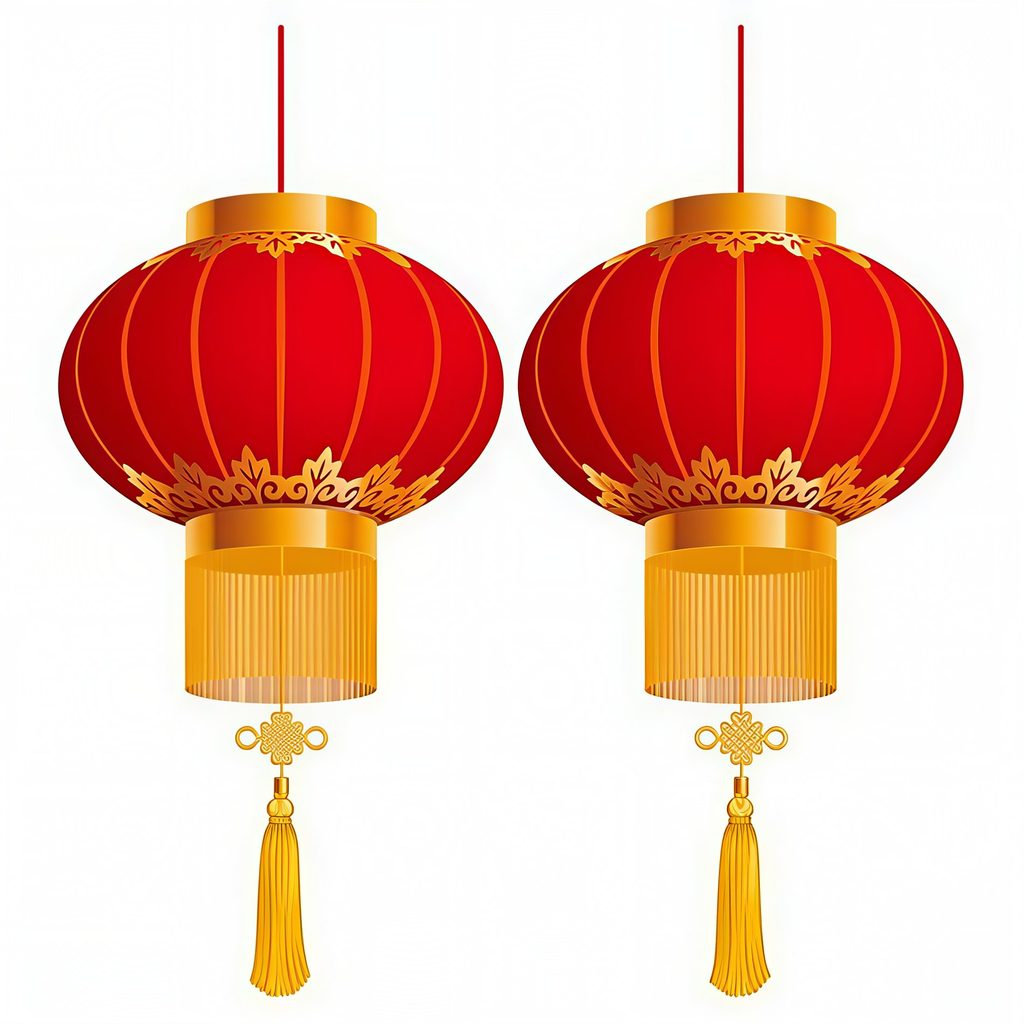
1. Traditional Red Round Lanterns
Red round lanterns are among the most recognizable types of Chinese lanterns for foreign audiences.
They usually have a rounded body, a red exterior, and decorative tassels. Some products also feature gold trim or auspicious patterns.
These lanterns are suitable for:
- Chinese New Year decorations.
- Chinese restaurants.
- Home courtyards.
- Commercial streets and shop entrances.
- Chinese cultural events.
- Film and photography sets.
Modern products range from small tabletop decorations to larger hanging lanterns.
Many contemporary round lanterns use collapsible structures, making them convenient to transport and store. Some traditional craft lanterns, however, may have more complex frames and surface decorations.
2. Palace Lanterns
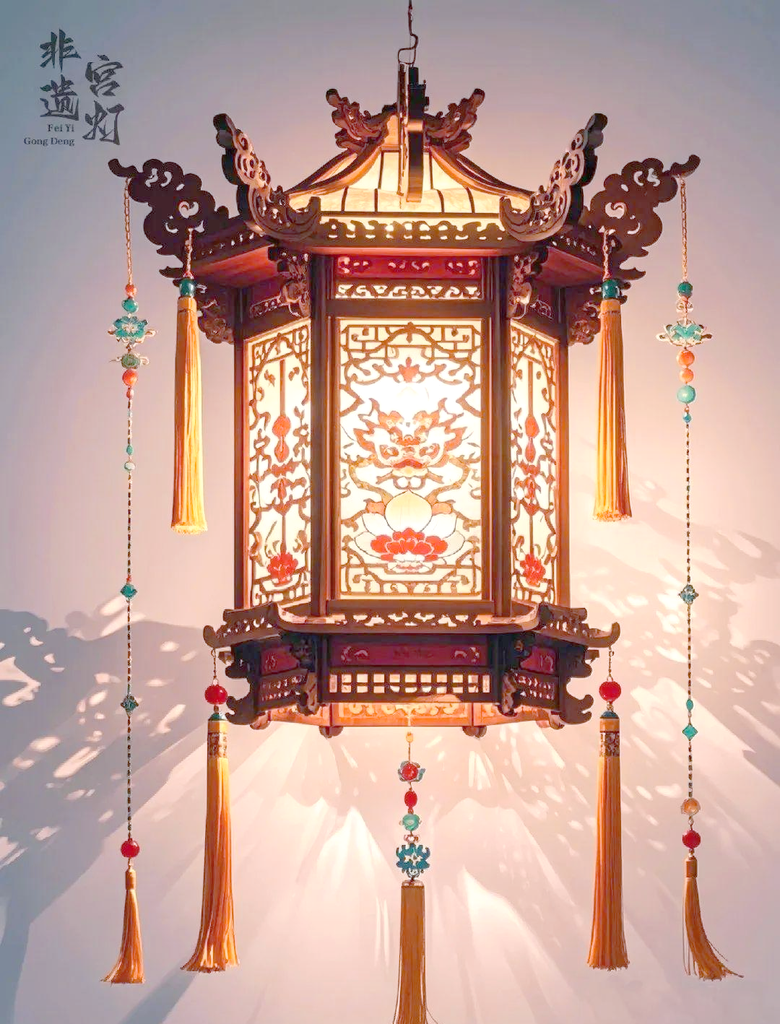
Palace lanterns are one of the representative types of traditional Chinese lighting fixtures.
Traditional palace lanterns often feature intricate structures and decorations, potentially incorporating wood, carving, painting, silk, and other materials.
Compared with simple round lanterns, palace lanterns generally place greater emphasis on structural details, decorative layers, and an overall dignified appearance.
Traditional palace lanterns may be displayed in traditional buildings, courtyards, cultural exhibitions, and high-end decorative spaces.
Modern palace lanterns may also use simplified structures and modern lighting technology to suit hotels, restaurants, commercial spaces, and interior design projects.
It is worth noting that some modern products marketed as palace lanterns merely borrow elements of the traditional style and are not necessarily made using traditional craftsmanship.
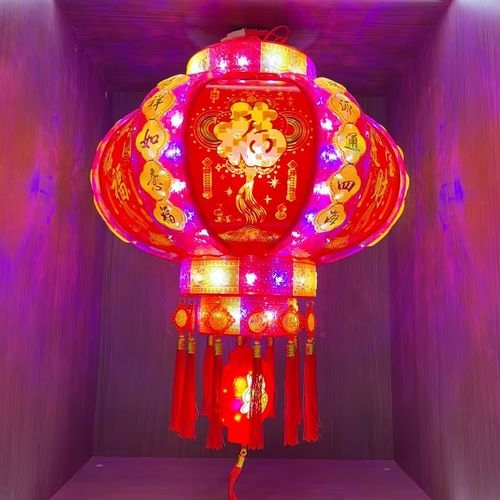
3. Revolving Lanterns
A revolving lantern is a traditional lantern with a dynamic visual effect.
In some traditional designs, rising warm air from the light source drives an internal rotating component, causing silhouettes or patterns to move continuously within the lantern’s light.
Revolving lanterns often evoke historical figures, horses, or other moving scenes, giving them a distinctive visual appeal.
Modern revolving lanterns may also use electric motors to simulate rotation.
They are suitable for traditional culture exhibitions, museums, educational activities, and themed decorations.
4. Paper Lanterns
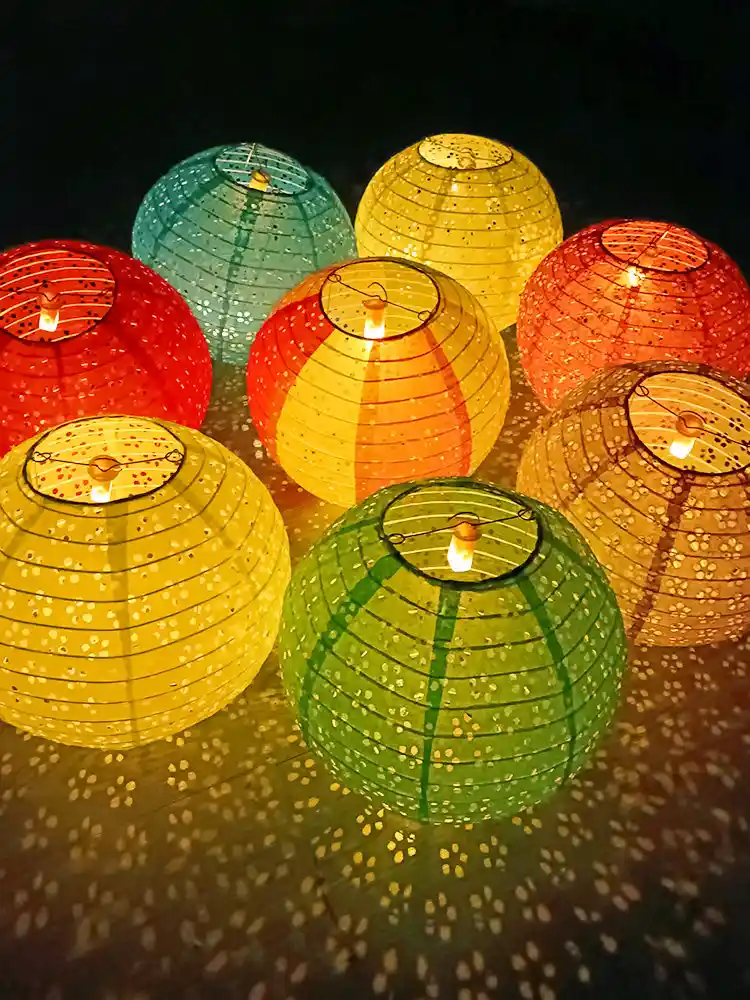
Paper lanterns use paper as their main outer material. They are generally lightweight, decorative, and well suited to printing.
Paper lanterns may be handmade using traditional methods or mass-produced using modern manufacturing processes.
Their surfaces are suitable for painting, printing, and pattern design.
However, different types of paper vary greatly in strength, moisture resistance, durability, and light transmission. The material should therefore be selected according to the intended application.
For outdoor use over extended periods, special attention should be paid to water resistance, wind resistance, and weather durability. Ordinary paper lanterns are generally unsuitable for prolonged exposure to rain and strong winds.
5. Silk and Fabric Lanterns
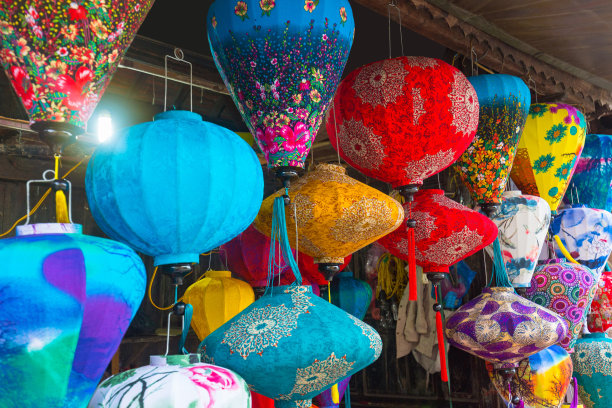
Silk and fabric lanterns use textiles as their outer covering.
These materials can create a refined surface texture and are suitable for embroidery, printing, painting, and other decorative methods.
Traditional silk lanterns may involve complex handmade processes, while modern fabric lanterns can also be produced through machine sewing, digital printing, and other industrial techniques.
They are suitable for traditional buildings, interior decoration, hotels, restaurants, weddings, and cultural exhibition spaces.
When selecting these products, buyers should consider flame-retardant properties, colorfastness, light resistance, and cleaning requirements, particularly for commercial or public spaces.
6. Bamboo-Frame Lanterns
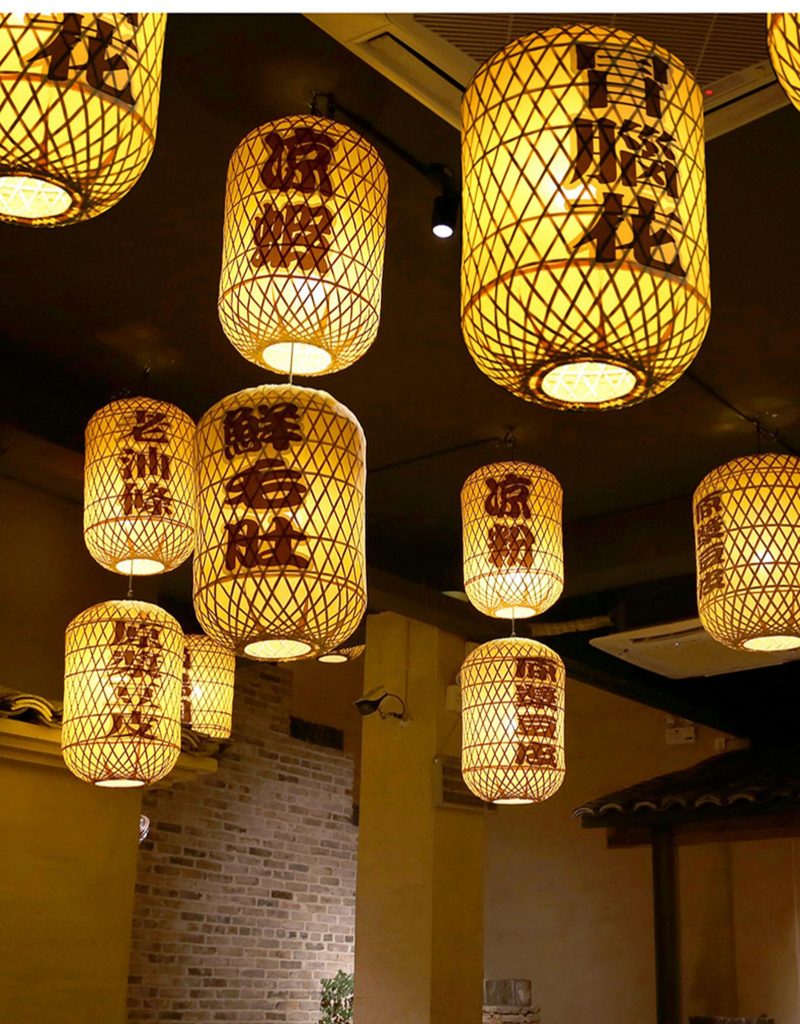
Bamboo-frame lanterns use bamboo as their primary structural material.
Bamboo has a degree of flexibility. After splitting, trimming, thinning, bending, and connecting the material, craftspeople can create various lantern structures.
In some traditional techniques, the shape and load-bearing properties of the frame depend heavily on the craftsperson’s experience.
Bamboo frames can be combined with paper, fabric, or other materials to produce lanterns of different sizes and shapes.
However, bamboo’s performance depends on its species, moisture content, processing methods, and storage conditions. The durability of different products can therefore vary.
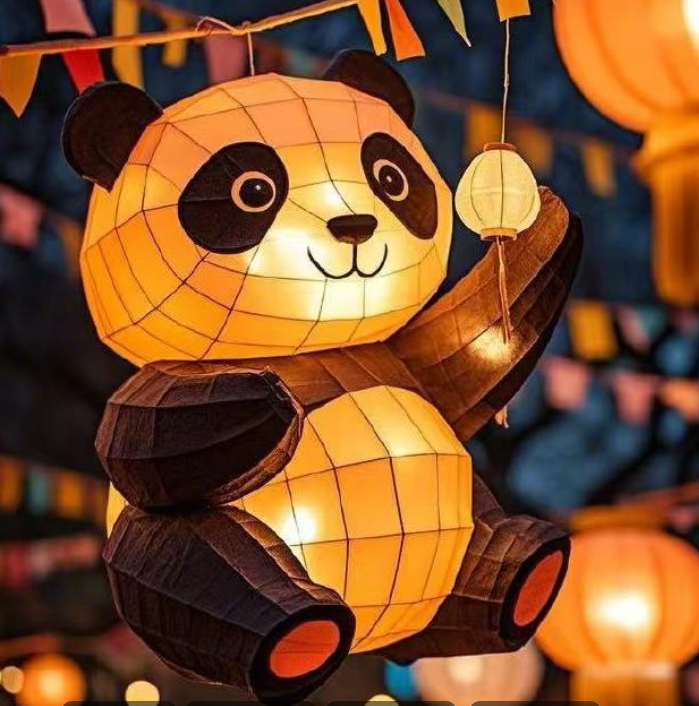
7. Three-Dimensional Animal Lanterns
Three-dimensional animal lanterns are designed in the shapes of animals.
Common themes include fish, dragons, phoenixes, rabbits, horses, birds, and animals from the Chinese zodiac.
These products do not necessarily follow the traditional round or rectangular lantern shape. Their structures are designed around the form of the animal.
During manufacturing, designers must address frame shaping, material covering, surface decoration, lighting layout, and overall stability.
Animal lanterns can be visually appealing for children’s festivals, themed lantern displays, cultural exhibitions, and tourist attractions.
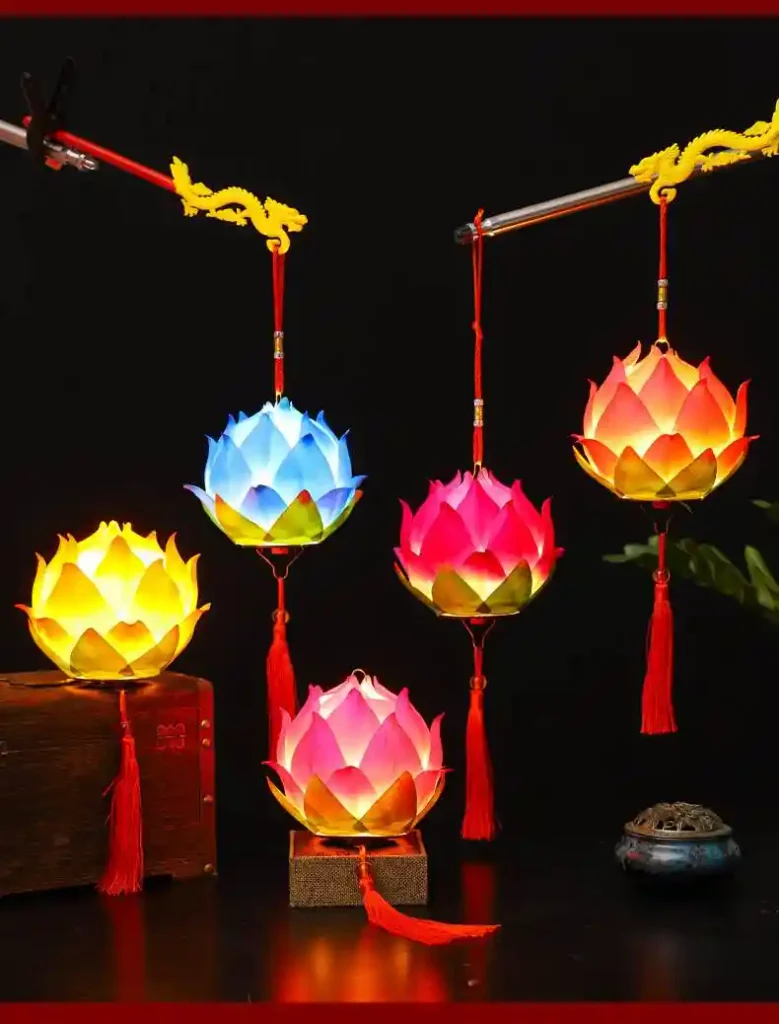
8. Flower Lanterns
Flower lanterns usually feature lotus flowers, peonies, plum blossoms, chrysanthemums, and other plants.
They may use flat floral patterns or three-dimensional petal structures.
Flower lanterns are suitable for courtyards, weddings, hotels, commercial spaces, and themed exhibitions.
Modern flower lanterns can also incorporate LED lighting to create different colors and layers at night.
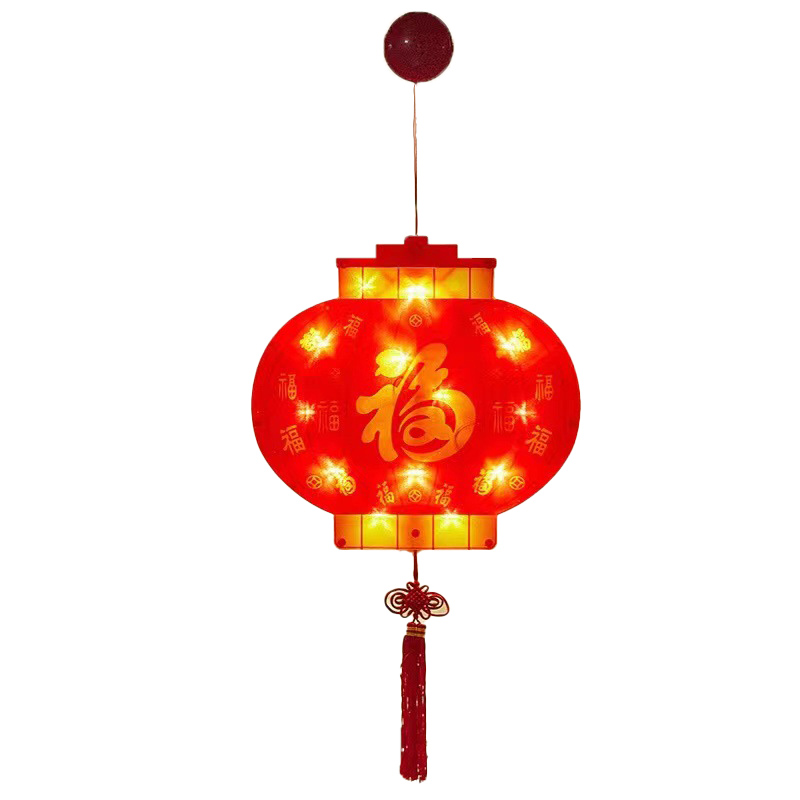
9. Modern LED Lanterns
Modern LED lanterns combine the appearance of traditional lanterns with contemporary lighting technology.
LEDs are energy-efficient and generally offer long service life and flexible lighting design options, making them suitable for many modern lantern products.
Modern LED lanterns may use batteries, USB power, or other electrical supplies, depending on their design.
Some products also support remote control, brightness adjustment, timers, or color-changing effects.
However, an LED lantern should not automatically be assumed to be waterproof, safe, or suitable for outdoor use simply because it uses LEDs. Actual performance depends on the electrical design, enclosure, materials, and relevant testing.
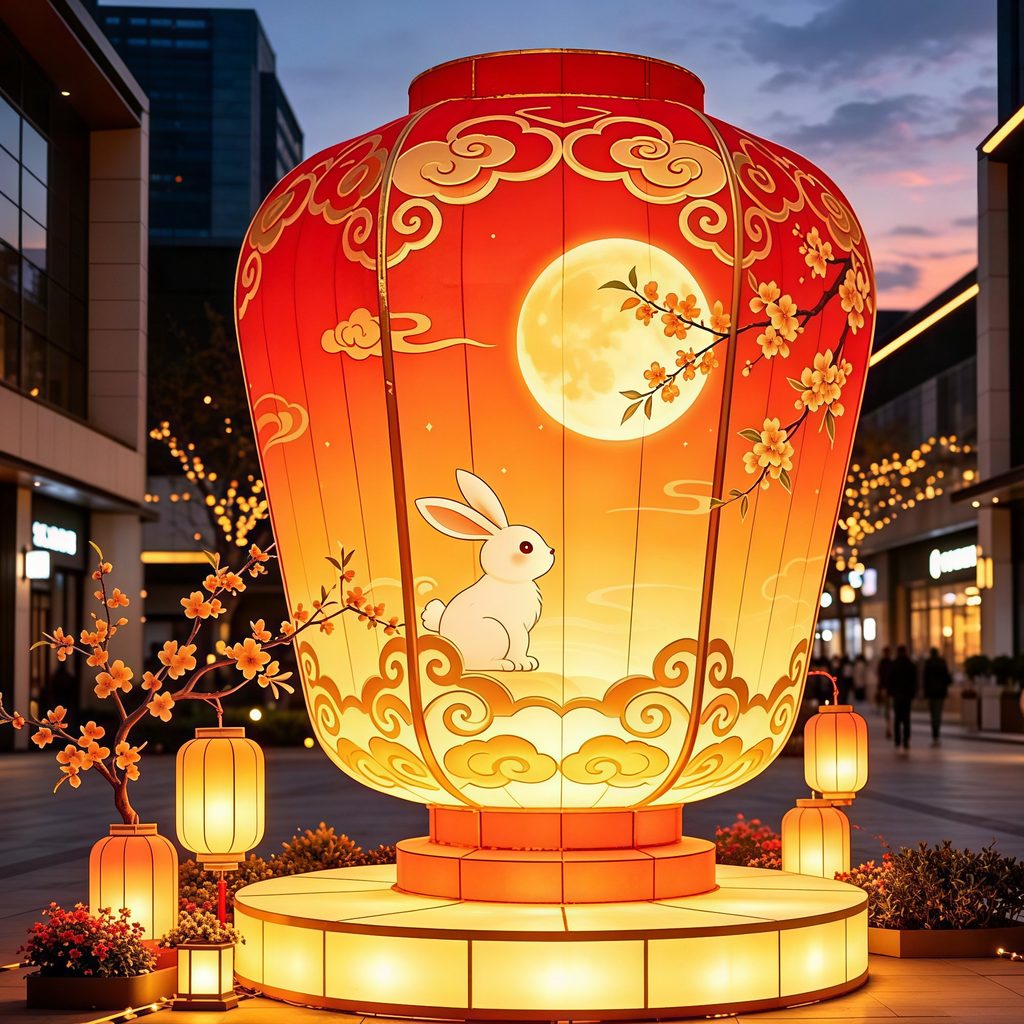
10. Large Festival Lanterns and Themed Installations
Large lantern installations are among the most impressive areas of Chinese lantern manufacturing and lantern-festival art.
Unlike individual hanging lanterns, large installations are often integrated artistic structures.
They may depict:
- Chinese myths and legends.
- Historical figures and traditional scenes.
- Dragons, phoenixes, fish, and other animals.
- Mountains, forests, gardens, and natural landscapes.
- Buildings, bridges, and urban landmarks.
- Zodiac themes.
- Modern abstract art and interactive lighting effects.
Large lantern installations generally require design, structural fabrication, material processing, lighting arrangements, electrical systems, on-site installation, and safety inspections.
They are therefore not merely lantern products but comprehensive projects combining art, engineering, and event management.
Part Seven: Regional Lantern Cultures in China
China is geographically vast, and its regions differ in history, materials, aesthetics, and folk customs. Chinese lantern culture therefore does not follow one completely uniform style.
Some regions are known for traditional palace lanterns or intricate craftsmanship. Others are famous for festival lantern displays and large-scale lantern art. Still others preserve distinctive local techniques.
The following are several representative examples.
1. Beijing Palace Lanterns: Refinement and Traditional Architectural Aesthetics
Beijing has close historical connections with imperial culture, traditional architecture, and palace lantern craftsmanship.
Palace lanterns often emphasize structure, decorative details, proportion, and an overall sense of dignity.
Traditional palace lanterns may incorporate wood, carving, painting, silk, and other decorative materials. Their forms can complement the spaces and decorative styles of traditional architecture.
For foreign readers who want to understand traditional Chinese lighting art, palace lanterns provide an important introduction to traditional Chinese decorative aesthetics.
However, palace lanterns are not exclusive to Beijing. Related techniques and forms have developed in different ways in other parts of China as well.
2. Kaifeng Lantern Festivals: Traditional Celebrations and Lantern Displays
Kaifeng, in Henan Province, has a rich historical and cultural heritage and is also known for festive events such as lantern festivals.
Lantern displays may include traditional lanterns, figures, animals, and various large-scale festival installations.
In these events, lanterns are not merely individual decorations. They may be combined with historical buildings, urban spaces, and festive performances to create a complete viewing experience.
The significance of a lantern festival lies not only in displaying lantern art but also in providing a place for social interaction, recreation, and cultural experiences.
3. Zigong Lantern Festivals: An Important Example of Large-Scale Lantern Art
Zigong, in Sichuan Province, is one of China’s important centers of large-scale lantern festivals and lantern production.
Zigong lantern festivals are widely known for their large installations and rich thematic designs.
Compared with small traditional lanterns, large-scale lantern art usually requires more complex design and manufacturing processes.
For example, a large animal installation may first require concept design, followed by the fabrication of a metal frame, installation of lighting and exterior materials, and final overall adjustments.
If the installation must be transported to another city or country, the manufacturer must also consider modular construction, disassembly, packaging dimensions, and on-site assembly.
Large-scale lantern art therefore demonstrates not only artistic ability but also engineering coordination and project execution.
The experience of Zigong lantern art shows that Chinese lantern manufacturing is not limited to small traditional products. It can also develop into a comprehensive project-based industry serving large festivals, cultural tourism, and international events.
4. Suzhou Lanterns: Delicate and Detailed Traditional Craftsmanship
Suzhou has a rich tradition of handicrafts and refined decorative arts.
In the traditional lantern aesthetics of the Jiangnan region, delicacy, fine detail, and harmony with living spaces are important qualities.
Some lantern artworks combine painting, paper-cutting, embroidery, or other techniques to achieve intricate decorative effects.
This style reminds us that Chinese lanterns are not limited to red and gold colors or large festival installations. They can also be delicate, elegant works of art designed for indoor appreciation.
5. Xianju Needle-Pierced Boneless Flower Lanterns: Craftsmanship Through Light and Shadow
The needle-pierced boneless flower lanterns of Xianju, Zhejiang Province, represent a distinctive local lantern-making tradition.
Their craftsmanship involves creating intricate patterns through needle piercing and related techniques, allowing light to pass through small holes and produce special visual effects.
Unlike lantern art that relies on heavy structures or large three-dimensional forms for visual impact, these lanterns emphasize fine patterns, light and shadow, and delicate handwork.
They demonstrate that Chinese lantern culture is expressed not only through large festivals but also through precise treatment of details, materials, and light.
6. Why Are Regional Lantern Styles So Diverse?
Regional differences in lantern art generally arise from several factors:
- Locally available materials.
- Traditional handicrafts and accumulated technical knowledge.
- Regional festival customs.
- Historic architecture and aesthetic traditions.
- Folk stories and local culture.
- The development of modern tourism, commerce, and cultural events.
Understanding Chinese lantern culture therefore requires more than treating one style as representative of the entire country.
Red round lanterns are certainly an important image of Chinese lantern culture, but they are only an introduction. The broader world of Chinese lantern art also includes refined traditional lighting fixtures, regional handicrafts, dynamic lanterns, and large-scale festival installations.
Part Eight: Chinese Lantern-Making Techniques — How Is a Lantern Made?
Understanding Chinese lanterns requires not only an appreciation of their culture but also an understanding of how they are made.
Manufacturing methods vary considerably between lantern types. A traditional handmade lantern may require a craftsperson to construct the frame, apply the covering, and complete the decoration step by step. Modern mass-produced lanterns may use molds, mechanical processing, printing, and standardized assembly.
Large lantern installations also require structural design, lighting systems, and on-site installation.
The following sections explain the general process of making a lantern, from design to finished product.
1. Step One: Determine the Intended Use
Before making a lantern, the first step is to determine where and how it will be used.
Examples include:
- Chinese New Year decorations for homes.
- Commercial space decorations.
- Mid-Autumn Festival events.
- Lantern Festival displays.
- Weddings and celebrations.
- Indoor art installations.
- Long-term outdoor hanging.
- Large themed lighting projects.
The intended use directly affects the design.
For indoor decorations, designers may focus more on appearance, material texture, and decorative details.
For outdoor events, they must consider water resistance, wind resistance, structural stability, power supply, and installation safety.
For international shipping, they must also consider folding, disassembly, packaging, and transportation costs.
Good lantern design therefore does not begin by choosing an appearance and only later trying to solve the remaining problems. It starts with the intended use and considers appearance, materials, manufacturing, transportation, and operating conditions together.
2. Step Two: Design the Appearance
During the design stage, the following details are generally determined:
- Lantern shape.
- Overall dimensions.
- Colors.
- Patterns.
- Materials.
- Light source.
- Hanging or mounting method.
- Whether custom text is required.
- Whether the lantern needs to fold or be disassembled.
For traditional lanterns, designers may refer to traditional forms and decorative patterns.
For modern products, designers can also use digital drawing, three-dimensional modeling, and other design tools to determine the structure and appearance.
For large lantern projects, designers must also consider overall proportions, internal structures, viewing distances, transportation sections, and on-site assembly.
Both cultural understanding and engineering judgment are important at this stage.
For example, if a customer wants a lantern with a Chinese cultural theme, the designer should not simply place a dragon, phoenix, or Chinese character on the surface. The proportions, arrangement, and cultural suitability of these elements must also be considered.
3. Step Three: Make the Frame
The frame is an important component that determines the lantern’s shape.
Common materials include:
- Bamboo.
- Wood.
- Iron wire or steel wire.
- Other metals.
- Engineering materials suitable for specific products.
Traditional bamboo-frame lanterns require bamboo to be processed into the appropriate width and thickness before being bent, connected, and secured.
Modern lanterns may use metal wire or other materials to form their frames.
For large lantern installations, the structure is usually more complex. Manufacturers must select an appropriate structural solution according to the installation’s dimensions, shape, weight, and mounting method.
For large installations used outdoors, structural designers must evaluate wind loads, connection strength, overturning risks, and on-site anchoring requirements based on the actual environment.
Two lanterns that look similar on the outside should not be assumed to have the same structural design or safety requirements.
4. Step Four: Apply the Outer Covering
Once the frame is complete, the outer covering material is installed.
Materials may include paper, silk, fabric, plastic, or other suitable options.
Different materials create different visual effects.
Paper can provide a lightweight, traditional appearance and is suitable for printing and painting.
Silk and fabric can create a softer surface appearance and are suitable for certain detailed decorative techniques.
Plastic and other modern materials may be more suitable for particular mass-production methods, cleaning requirements, or outdoor applications. Their actual performance depends on the specific material and product structure.
The covering material must fit the frame properly. Incorrect tension can cause wrinkles, deformation, or an uneven surface.
For large lantern installations, the way the covering materials are joined also affects the overall appearance and the ease of later repair or replacement.
5. Step Five: Decorate the Lantern Surface
Surface decoration is one of the most artistically expressive stages of Chinese lantern production.
Common methods include:
- Hand painting.
- Printing.
- Paper cutting.
- Embroidery.
- Collage.
- Three-dimensional decoration.
- Installing metal or other decorative components.
- Traditional calligraphy and auspicious character designs.
Traditional handcrafted products may require artisans to paint or decorate the patterns step by step.
Modern mass production can combine printing equipment, digital design, and standardized processing to improve efficiency and consistency.
For customers who need large quantities of identical products, printing and standardized processes may be more suitable for controlling costs.
Customers who value handmade details, artistic quality, or unique designs may require more manual work.
These approaches do not necessarily replace one another. They serve different product positions and market needs.
6. Step Six: Install the Light Source
Modern Chinese lanterns increasingly use LED lighting.
Compared with traditional flame-based light sources, LEDs are generally easier to control and standardize, making them suitable for many modern indoor decorations, commercial spaces, and large events.
Lighting design needs to consider:
- Brightness.
- Color temperature.
- Color.
- Power supply.
- Light distribution.
- Heat generation.
- Service life.
- Maintenance.
- Electrical safety.
Small lanterns may use batteries or USB power, while larger decorative lanterns may require an external power supply.
Large lantern installations may contain multiple lighting circuits, controllers, and electrical connection points.
For outdoor use, the electrical system must be designed with appropriate protection for the environment.
Buyers should confirm whether the product has undergone the relevant safety testing for its intended use rather than judging its safety solely from product photographs or a seller’s description.
7. Step Seven: Assembly and Quality Inspection
After the main manufacturing work is completed, the lantern must be assembled and inspected.
Inspection items may include:
- Whether the shape matches the design.
- Whether the dimensions meet the order requirements.
- Whether the frame is secure.
- Whether the outer material is damaged.
- Whether patterns and text are correct.
- Whether the lighting works properly.
- Whether the power supply and connectors are secure.
- Whether the hanging structure is reliable.
- Whether the product may deform during packaging.
- Whether the product is suitable for its intended environment.
For customized orders, the finished product should also be checked against the design approved by the customer.
For large lantern installations, quality inspection may additionally include structural testing, trial assembly, lighting adjustments, and on-site acceptance checks.
8. Step Eight: Packaging and Transportation
Packaging is particularly important for Chinese lantern exports.
Some lanterns can be folded or compressed for packaging. Others require their frames and decorative components to be disassembled. Large lantern installations may need to be transported in modules.
Packaging design must balance several factors:
- Protecting the product.
- Controlling volume and weight.
- Reducing the risk of transportation damage.
- Facilitating storage.
- Making unpacking and assembly easier for customers.
- Avoiding unnecessary packaging costs.
For international purchasing, the product price is only one part of the total cost. Packaging volume, transportation methods, customs duties, and destination handling charges may all affect the final cost.
Exporting lanterns therefore requires manufacturers not only to produce the products but also to understand international transportation and delivery requirements.
Part Nine: China’s Lantern Manufacturing Capabilities — Why Can China Produce Such a Wide Variety of Lanterns?
China’s lantern manufacturing capabilities have developed through both traditional craftsmanship and modern industrial growth.
China has a large manufacturing base, with extensive resources in textiles, metalworking, plastics, printing, electronic components, lighting equipment, packaging, and logistics.
Lanterns involve multiple materials and processing stages, so they can benefit from cooperation across these industries.
However, Chinese lantern manufacturing is not carried out by a single company or region. Different businesses specialize in different products. Some focus on traditional handicrafts, some on mass production, and others on large lantern festivals and engineering projects.
1. A Complete Supply Chain Is an Important Foundation
A modern lantern may involve several industrial stages.
Design and Development
Exterior design, structural design, pattern design, dimension confirmation, and customized solutions.
Raw Material Supply
Paper, fabric, silk, bamboo, metal wire, plastic, decorative components, and electronic parts.
Processing and Manufacturing
Frame construction, cutting, bending, sewing, printing, surface decoration, and component processing.
Lighting and Assembly
LED installation, electrical connections, lighting adjustments, structural assembly, and finished-product inspection.
Packaging and Export
Foldable or disassembled packaging, warehousing, international transportation, and destination delivery arrangements.
This supply-chain structure allows manufacturers to select suitable suppliers and processing methods for different product types.
For example, a manufacturer may not produce all LED components in-house. Instead, it may purchase suitable lighting components and then complete the lantern structure, assembly, and final inspection.
A large lantern-art company, by contrast, may have its own design team, structural fabrication workers, electrical specialists, and installation teams so that it can complete more complex projects.
The advantage of the supply chain is not that every factory can independently perform every task. Rather, it is that different stages can work together to create a complete process from design to delivery.
2. Traditional Craftsmanship and Modern Manufacturing Coexist
One important feature of Chinese lantern manufacturing is that traditional handcrafts and modern industrial production can exist side by side.
Traditional Handcrafted Production
Traditional handcrafted lanterns may require considerable manual work.
Artisans must handle the frame according to the characteristics of the material, adjust its shape, complete the decoration, and use their experience to control the final result.
This approach is suitable for products that emphasize craftsmanship, artistic expression, and distinctive designs.
Its challenges include production time, labor costs, and consistency across large batches.
Modern Mass Production
Modern lantern manufacturing can use standardized molds, mechanical processing, printing, automated or semi-automated equipment, and consistent assembly procedures.
This approach is suitable for producing large quantities of visually consistent products.
Standardized production generally helps control dimensions, reduce repetitive labor, and improve consistency between batches.
However, this does not mean that every product is suitable for machine production. For complex traditional decorations and special shapes, manual work may remain important.
How Can the Two Approaches Be Combined?
Many modern products combine design, mechanical processing, printing, and manual assembly.
For example, a manufacturer may use digital design to determine the appearance, standardized methods to process the frame, and workers to complete the covering, decoration, and final inspection.
This mixed production approach can help balance efficiency, cost, and appearance.
3. Why Is China’s Manufacturing Base Well Suited to Lantern Customization?
Customization is an important part of China’s lantern export market.
Different customers may have very different requirements.
A restaurant may need red round lanterns of a standard size. A hotel may need customized lanterns in its brand colors. An event company may need zodiac-themed lantern installations. A large lantern festival may require a complete collection of dragon-shaped, floral, or historical-scene installations.
Manufacturers may adjust:
- Dimensions.
- Colors.
- Patterns.
- Chinese characters and other text.
- Brand logos.
- Materials.
- Light sources.
- Packaging methods.
- Installation structures.
- Product quantities.
However, customization does not mean that every factory can fulfill every requirement.
Small factories may be better at producing simple lanterns and small-to-medium batches. Complex large-scale lantern projects require more extensive design, structural, electrical, and on-site installation capabilities.
When purchasing, customers should therefore choose manufacturers according to the complexity of their projects.
4. How Does Chinese Lantern Manufacturing Use Modern Design Technology?
Modern design tools can help manufacturers communicate customer requirements more clearly.
For example, design teams can use digital drawings or three-dimensional modeling to demonstrate a lantern’s shape, proportions, colors, and installation methods.
For large lantern projects, three-dimensional design can also help teams examine the relationships between components and plan disassembly and transportation.
Digital design helps reduce misunderstandings, but it cannot completely replace physical samples or structural verification.
Complex products, especially large outdoor lantern installations, still require material testing, assessment of site conditions, and engineering judgment.
5. What Manufacturing Capabilities Are Demonstrated by Large Lantern Festivals?
A large lantern festival is not simply a matter of hanging many lanterns together.
A complete project may involve the following stages:
- Determining the theme and event objectives.
- Planning the overall space.
- Designing the shapes and visual effects of the installations.
- Developing structural and material solutions.
- Manufacturing the frames and exterior decorations.
- Installing lighting and electrical systems.
- Dividing large components into sections and modules.
- Packaging and transporting them to the project site.
- Completing on-site assembly, anchoring, and lighting adjustments.
- Conducting safety inspections and project acceptance.
Artistic design and engineering execution are both essential throughout this process.
Even if a lantern installation looks beautiful, it will not be a successful engineering project if its structure is unstable, its electrical system is unreliable, or it cannot be assembled properly after transportation.
The capabilities of a large lantern-art manufacturer therefore extend beyond making lanterns. They also include project management, supply-chain coordination, quality control, and on-site execution.
6. What Are the Advantages of Chinese Lanterns in Export Markets?
Chinese lanterns have entered markets in different countries and regions for several reasons.
First, China has a broad supply chain for materials and manufacturing.
Second, many manufacturers can customize dimensions, colors, patterns, and packaging according to customer requirements.
Third, there is considerable potential to combine traditional festival culture with modern decorative markets.
Finally, established international logistics systems allow lanterns to be shipped to different destinations by sea, air, or other transportation methods.
However, manufacturers differ significantly in their capabilities and product quality. “Made in China” does not mean that all products have the same quality, certifications, or delivery capabilities.
International buyers still need to carefully check product specifications, samples, quality standards, packaging plans, and actual delivery capabilities when choosing suppliers.
Part Ten: From Chinese Factories to the World — How Are Chinese Lanterns Used Internationally?
The international applications of Chinese lanterns are no longer limited to traditional celebrations in Chinese communities.
As cultural exchange, tourism, commercial decoration, and themed events develop, Chinese lanterns can be used in a wide variety of settings.
1. Chinese New Year Celebrations
Chinese New Year is one of the most recognizable international uses of Chinese lanterns.
Many cities organize Lunar New Year celebrations, while cultural institutions, schools, shopping malls, and communities may also arrange related events.
Red lanterns can decorate entrances, stages, exhibition areas, and commercial spaces.
For events aimed at international audiences, Chinese lanterns can be accompanied by Chinese-English explanations introducing the Chinese New Year, lanterns, and related traditions.
2. Restaurants and Hotels
Chinese restaurants, Asian-style restaurants, and themed hotels can use lanterns to create distinctive atmospheres.
Different spaces are suited to different lantern designs.
A traditional Chinese restaurant may choose red round lanterns or palace lanterns. A modern hotel may prefer simpler lantern designs. A themed restaurant may customize colors and patterns to match its overall concept.
If lanterns need to remain suspended for long periods, durability, cleaning methods, and lighting-system maintenance should be considered.
3. Shopping Malls and Retail Spaces
Shopping malls and retail spaces can use lanterns for decorations during the Chinese New Year, Lantern Festival, cultural festivals, and brand events.
For example, a shopping mall might install large zodiac lanterns or arrange a collection of Chinese-themed lanterns in its central atrium.
These decorations can create an atmosphere and provide visual settings where visitors can take photographs and share their experiences.
For commercial events, lantern size, visual impact, installation safety, and ease of assembly and disassembly are all important.
4. Cultural Festivals and City Events
Some cities hold Asian cultural festivals, Chinese cultural festivals, or other international cultural exchange events.
Lanterns can become one of the visual focal points of these events.
Small events may use traditional hanging lanterns, while large events may feature animal installations, floral installations, lantern corridors, and other structures.
When events target audiences from different cultural backgrounds, explanatory signs, bilingual introductions, and guided tours can help visitors better understand the works.
5. Weddings and Private Events
Lanterns can also be used for weddings, birthdays, anniversaries, and private gatherings.
Red lanterns are suitable for traditional Chinese weddings, while lanterns in other colors can suit modern weddings and different decorative themes.
For private events, buyers generally pay attention to appearance, size, quantity, and the overall decorative effect.
If custom names, dates, or special text are required, spelling, fonts, and layout should be confirmed before production.
6. Photography, Film, and Stage Design
Lanterns are also common visual elements in film, stage, and photography sets.
They can be used to represent historical Chinese scenes, traditional streets, festival environments, or spaces with an East Asian aesthetic.
These applications often place greater emphasis on appearance, dimensions, light transmission, and visual performance on camera.
Some products may not even require actual lighting. They may simply need an appropriate shape and surface finish.
For this reason, lanterns made as film props can have very different design requirements from lanterns intended for long-term outdoor use.
Part Eleven: How to Choose the Right Chinese Lanterns
If you are a foreign consumer, retailer, restaurant owner, event planner, or importer, clarify the following points before purchasing Chinese lanterns.
1. Where Will You Use the Lanterns?
This is the most important starting point.
| Application | Key Considerations |
|---|---|
| Indoor home decoration | Appearance, dimensions, colors, storage convenience |
| Home courtyard | Weather resistance, mounting method, power supply |
| Restaurants and hotels | Visual style, durability, maintenance, cleaning |
| Malls and commercial spaces | Consistent design, batch consistency, installation safety |
| Festival events | Quantity, installation efficiency, disassembly, transportation |
| Outdoor lantern festivals | Structural stability, electrical protection, maintenance |
| Weddings and celebrations | Colors, patterns, custom text, overall style |
| Cultural exhibitions | Craftsmanship, cultural accuracy, display methods |
| Film and photography | Appearance, dimensions, light transmission, visual performance |
Do not place an order simply because a lantern looks attractive. First confirm whether it is suitable for the actual environment in which it will be used.
2. Do You Need Traditional Craftsmanship or a Modern Decorative Product?
If cultural character is your priority, pay attention to traditional shapes, craftsmanship, and material texture.
If you need large quantities for commercial decoration, focus more on consistent dimensions, packaging, lead times, and cost.
If you need a large lantern festival installation, look for a supplier with relevant design and engineering experience.
These three requirements are different, so price alone should not be the basis for comparison.
3. How Should You Choose Lantern Colors?
Colors should match the intended setting and design theme.
- Red: Suitable for Chinese New Year, Lantern Festival, and traditional celebratory settings.
- Red and gold: Suitable for settings requiring a strong traditional festive atmosphere.
- White or light colors: Suitable for some modern interior decorations and minimalist designs.
- Pink: Can be used for weddings, floral themes, and certain celebrations.
- Multicolored designs: Suitable for children’s events, themed lantern festivals, and spaces requiring strong visual impact.
There are no absolute rules for choosing colors. For commercial projects, the most important considerations are compatibility with the brand, environment, and overall decoration.
4. How Should You Choose Lantern Materials?
Materials affect a lantern’s appearance, weight, durability, and price.
Paper
Advantages include low weight and suitability for printing and traditional decoration.
Moisture resistance, durability, and the intended environment should be considered.
Fabric or Silk
These materials offer attractive surface textures and are suitable for decorative products.
Cleaning, light resistance, and specific flame-retardant requirements should be considered.
Bamboo
Bamboo is suitable for certain traditional lantern frames and provides the character of a natural material.
Processing quality, structural strength, and storage conditions should be considered.
Metal Structures
Metal structures are used in many lanterns and large lantern installations that require stable frames.
The appropriate structure should be selected according to product dimensions, weight, environmental conditions, and installation methods.
Plastic and Modern Composite Materials
These materials are suitable for certain modern decorative products and specific applications.
Their actual weather resistance, flame-retardant properties, and safety performance should be confirmed according to the material and product design.
5. How Should You Choose the Right Size?
Lantern dimensions should match the hanging location and viewing distance.
For indoor home decoration, lanterns that are too large may occupy too much space. Along a wide commercial street, small lanterns may not create a noticeable visual effect.
For projects requiring many lanterns to be hung in a consistent arrangement, the buyer should also confirm that dimensions are uniform and that sufficient spacing can be maintained between adjacent lanterns.
For large installations, design must take into account the overall space, viewing distance, structural safety, and transportation conditions.
6. Do You Need Lighting?
Some lanterns are primarily decorative props and do not require an internal light source.
Others need to provide actual illumination or nighttime display effects.
If lighting is required, confirm:
- Power supply method.
- Brightness and color.
- Whether the power supply is included.
- Whether batteries can be replaced or repairs performed.
- Whether the product is suitable for outdoor use.
- Whether relevant safety tests or certification documents are available.
For export products, the electrical safety requirements of the destination market must also be considered.
7. Do You Need Customization?
If you need a brand logo, specific Chinese characters, special colors, or a unique shape, ask the manufacturer whether customization is available.
Before requesting a customized product, prepare:
- Reference images.
- Target dimensions.
- Expected quantity.
- Color requirements.
- Material preferences.
- Intended application.
- Whether lighting is required.
- Packaging and transportation requirements.
- Desired delivery date.
The clearer the information, the easier it is for the supplier to provide an accurate quotation.
Part Twelve: What Determines the Price of Chinese Lanterns?
There is no single fixed price for Chinese lanterns.
Two products both described as “red lanterns” may differ considerably in size, materials, frame construction, surface decoration, light source, and manufacturing methods.
It is therefore impossible to determine a price accurately from the product name alone.
1. Material Costs
Different materials have different procurement costs.
Ordinary paper, specific fabrics, silk, metal structures, and special decorative components can vary significantly in price.
Material quality also affects durability and manufacturing difficulty.
2. Product Dimensions
In general, larger products require more materials and packaging space.
However, price does not necessarily increase in direct proportion to size. Some small products may require complex craftsmanship, while some large products may use relatively standardized structures.
3. Manufacturing Techniques
Hand painting, embroidery, complex carving, special structures, and customized patterns generally increase production time and labor costs.
If a product uses standardized structures and established mass-production methods, economies of scale may help control the unit cost.
4. Lighting and Electrical Configuration
Products with LED lighting require lighting components, wiring, power supplies, and related electrical parts.
If a product requires special lighting effects, remote control, or a complex control system, costs may increase further.
5. Order Quantity
Order quantity affects production planning, material purchasing, and the allocation of mold or design costs.
Large orders do not necessarily mean that all costs decrease proportionally. If an order involves complex customization, special materials, or many different designs, production and management costs may remain relatively high.
6. Packaging and Transportation
Transportation costs depend not only on weight but also on packaging volume, whether the product can be folded, whether special protection is required, and which transportation method is used.
For large lantern installations, transportation, on-site installation, and project management may account for a significant part of the total budget.
7. How Can You Obtain a More Accurate Quotation?
Provide the supplier with clear product information rather than simply asking, “How much does one lantern cost?”
For example, you could say:
“I need a batch of red round lanterns for Chinese New Year decorations. The products must meet specified dimensions and color requirements, include LED lighting, and be suitable primarily for indoor hanging. Please provide quotations for different order quantities and specify packaging dimensions, production lead time, and transportation options.”
This approach generally helps suppliers provide more useful and comparable quotations.
Part Thirteen: What Should You Consider When Purchasing Chinese Lanterns?
For overseas buyers, purchasing Chinese lanterns involves more than choosing a product. It also includes supplier evaluation, sample approval, quality control, transportation, and destination-market compliance.
1. Choose the Right Supplier
Chinese lantern suppliers may include:
- Manufacturers specializing in traditional lanterns.
- Factories specializing in festival decorations.
- Companies producing paper or fabric decorations.
- Manufacturers producing LED lanterns.
- Lantern-art companies undertaking large festival projects.
- Trading companies offering design, sourcing, and export services.
Different supplier types are suited to different purchasing needs.
If you need a batch of standardized small lanterns, look for a supplier experienced in mass production.
If you need traditional handcrafted products, focus on relevant craftsmanship and experience.
If you need a complete large-scale lantern festival installation, evaluate the supplier’s capabilities in project design, structural fabrication, lighting systems, and on-site execution.
2. Confirm a Sample First
For first-time buyers, a sample can help determine whether the product meets expectations.
Important points to inspect include:
- Actual color.
- Dimensions.
- Material texture.
- Frame construction.
- Pattern quality.
- Text accuracy.
- Lighting effects.
- Packaging method.
Sample approval is particularly important when the final order involves a large quantity.
3. Define Quality Standards Clearly
The order should specify product requirements as clearly as possible.
For example:
- Product dimensions and permitted tolerances.
- Material types.
- Color requirements.
- Patterns and text.
- Lighting configuration.
- Power specifications.
- Packaging method.
- Acceptance criteria.
- Procedures for handling nonconforming products.
If an order simply states “traditional red lanterns,” the buyer and seller may have very different interpretations of the actual product.
4. Pay Attention to Electrical Safety and Material Requirements
Different countries and regions may have different requirements for electrical products, flame-retardant materials, public-space decorations, and outdoor equipment.
If a lantern includes a power supply, LED module, or control device, confirm which standards and certification requirements apply in the destination market.
If the lanterns will be used in hotels, shopping malls, schools, or large public events, pay particular attention to flame-retardant performance and installation safety.
Do not assume a product is compliant simply because the supplier claims that it meets “international standards.” Where necessary, request the relevant test reports and certification documents and confirm that they apply to the specific product model being purchased.
5. Understand Transportation and Installation Requirements
Ordinary lanterns may require only simple packaging and standard transportation.
Large lantern projects, however, may require disassembly, sectional packaging, on-site assembly, and electrical commissioning.
Before purchasing, confirm:
- Whether on-site assembly is required.
- Whether installation instructions are provided.
- Whether special tools are needed.
- Whether power supplies and control components are included.
- Whether professional installers are required.
- Who is responsible for transportation damage.
- How repairs will be handled after delivery.
If the products must be ready for a specific event date, allow sufficient time for production, transportation, customs clearance, and installation.
6. Confirm the Total Cost, Not Just the Unit Price
The total cost of an international purchase may include:
- Product price.
- Sample and design fees.
- Packaging costs.
- International transportation.
- Insurance.
- Import duties and other taxes.
- Customs clearance and destination handling charges.
- Installation and maintenance costs.
Whether these costs apply and which party is responsible for them depend on the order and trade arrangements.
When comparing supplier quotations, try to compare products with the same specifications, delivery conditions, and cost coverage.
Part Fourteen: Chinese Lanterns and the Modern Preservation of Traditional Culture
Traditional culture does not mean that everything must remain exactly as it was in ancient times.
A traditional craft can continue to develop when its essential cultural characteristics are preserved while it adapts to new materials, lifestyles, and applications.
Chinese lanterns illustrate this process.
1. From Candles to LEDs
Traditional lanterns once used candles, oil lamps, and other flame-based light sources.
Modern lanterns can use LED lighting, making them easier to apply in many contemporary indoor decorations, commercial spaces, and large events.
However, traditional lanterns and modern LED lanterns are not exactly the same products. Traditional lanterns may place greater emphasis on historical craftsmanship and traditional uses, while modern LED lanterns generally focus more on electrical configuration, installation convenience, and contemporary requirements.
Both can form part of Chinese lantern culture, but their functions and safety requirements should be understood separately.
2. From Handcrafted Decoration to Digital Design
Traditional lantern patterns may have been painted or decorated by hand.
Modern manufacturers can use digital drawing, digital printing, and other design tools to create patterns.
Digital technology makes it easier to modify patterns, adjust dimensions, and reproduce designs in batches.
At the same time, traditional craftsmanship can continue to play an important role in special patterns, artistic works, and high-end customized products.
Modern technology can help traditional lanterns enter new applications, but it does not automatically give a product deep cultural meaning. Cultural expression still requires designers to understand traditional patterns and their contexts.
3. From Individual Lanterns to Large Cultural Scenes
In the past, people may have mainly encountered individual lanterns in homes, shops, or traditional buildings.
Today, large lantern festivals can expand lanterns into complete cultural scenes.
For example, a festival may use lantern installations to depict dragon legends, historical stories, garden landscapes, or the Chinese zodiac.
Visitors no longer see only an individual lantern. They experience a cultural environment created through lighting, space, structure, color, and storytelling.
This allows Chinese lanterns to enter tourist attractions, city festivals, cultural exhibitions, and international events.
4. How Can Traditional Lanterns Tell Chinese Cultural Stories to Foreign Audiences?
If foreign visitors see only a red lantern, they may interpret it simply as an attractive festive decoration.
If they also learn about the cultural meaning of red, the connection between lanterns and the Chinese New Year, Lantern Festival traditions, and auspicious patterns, they can understand much more.
For example:
- A lantern bearing the character “福” can introduce Chinese wishes for happiness and good fortune.
- A fish-shaped lantern can introduce the expression “年年有余,” meaning abundance year after year.
- A group of zodiac lanterns can introduce the traditional Chinese zodiac and lunar-year naming.
- A large dragon lantern can introduce the symbolic role of dragons in traditional Chinese art.
- A lantern-riddle activity can allow foreign visitors to experience Chinese characters and language games firsthand.
Cultural communication should therefore go beyond displaying objects. Stories, text, activities, and interactive experiences can help visitors understand their meaning.
Part Fifteen: The Future of Chinese Lanterns
As materials, lighting technology, manufacturing methods, and international cultural exchange continue to develop, Chinese lanterns have several potential directions for future growth.
The following are trends worth watching, although they do not mean that every company or market has already adopted these approaches.
1. More Diverse Customization
Different countries, regions, and consumers have different aesthetic preferences.
Future lantern designs can be adjusted according to local cultures, brand identities, architectural environments, and event themes.
For example, an overseas restaurant may need lanterns that match its brand colors. A city event organizer may need themed lanterns reflecting local characteristics. A museum may need replicas of traditional lighting fixtures for a historical exhibition.
Customization can expand the range of applications, but it also requires manufacturers to have stronger design communication, sample approval, and quality management capabilities.
2. Greater Emphasis on Safety and Durability
Modern lanterns must not only look attractive but also withstand their intended conditions of use.
For outdoor products, water resistance, wind resistance, structural stability, and electrical protection may be important.
Products used in public spaces may also need to meet flame-retardant requirements, installation regulations, and maintenance standards.
Future competition should not focus only on appearance and price. Safety, reliability, and long-term operating costs also matter.
3. More Flexible Modular Structures
Large lantern installations often need to be transported and assembled on-site.
If a structure can be divided into well-designed modules, packaging, transportation, and maintenance may become easier.
However, modular design requires careful consideration of connection methods, structural strength, assembly efficiency, and visual continuity.
Modular design is particularly worth considering for large lantern projects that must be transported internationally.
4. Combining Cultural Content with Interactive Experiences
Lanterns can be combined with explanatory signs, riddles, digital guides, and interactive activities to encourage visitors to learn more about Chinese culture.
For example, a lantern festival could display a dragon lantern alongside an explanation of the dragon’s cultural symbolism. It could also place Chinese-English riddles beside lanterns so that visitors can participate in guessing games.
Such designs can increase audience engagement and help ensure that visitors understand the cultural background rather than seeing only decorations.
5. Continued Preservation of Traditional Handicrafts
Modern mass production can improve efficiency, but traditional handicrafts still have distinctive cultural value.
Some traditional techniques depend on years of experience, manual skill, and accumulated regional knowledge. They cannot necessarily be replaced completely by machine production.
The future of China’s lantern industry therefore requires not only the development of modern manufacturing but also the documentation, preservation, and appropriate application of traditional techniques.
For cultural institutions, designers, and manufacturers, an important long-term challenge is finding ways to respect traditional craftsmanship while allowing it to remain part of modern life.
Part Sixteen: Frequently Asked Questions About Chinese Lanterns
1. Are Chinese Lanterns Used Only During the Chinese New Year?
No.
The Chinese New Year is one of the most representative occasions for Chinese lanterns, but lanterns are also used during the Lantern Festival, Mid-Autumn Festival, weddings, birthdays, grand openings, cultural exhibitions, commercial decorations, and other events.
Different occasions suit different lantern styles.
2. Why Are Chinese Lanterns Usually Red?
Red is often associated with celebration, good fortune, and positive wishes in traditional Chinese festival culture.
However, Chinese lanterns are not all red. They can also be made in gold, white, pink, blue, green, and other colors, depending on the design and intended use.
3. Do All Chinese Lanterns Have Cultural Meaning?
Not necessarily.
Traditional lanterns may contain clearly recognizable auspicious patterns, Chinese characters, or regional cultural elements.
Modern decorative lanterns may focus mainly on appearance, color, and lighting effects.
Even if a modern lantern borrows a traditional shape, that does not necessarily mean it has a specific historical background or traditional craftsmanship value.
4. What Materials Are Commonly Used to Make Chinese Lanterns?
Common materials include paper, fabric, silk, bamboo, wood, metal, and modern composite materials.
Different materials suit different applications.
For example, paper is suitable for some lightweight decorative lanterns, fabric is used for certain interior decoration products, and metal structures may be used for larger lanterns or installations that require a more stable frame.
5. Can Modern Chinese Lanterns Be Waterproof?
Some products are designed for particular outdoor environments, but not all lanterns are waterproof.
Water resistance depends on the materials, joint structures, electrical system, and manufacturing methods.
Before purchasing, confirm the supplier’s stated protection rating, test documentation, and conditions of use.
6. Can Chinese Lanterns Use LED Lights?
Yes.
Modern Chinese lanterns frequently use LED lighting.
LEDs can be used in small decorative lanterns, commercial lanterns, and large lantern installations. However, power supplies, brightness, control functions, and safety performance vary considerably between products.
7. Can Chinese Lanterns Be Customized?
Many Chinese lantern suppliers offer some degree of customization.
Customized features may include dimensions, colors, patterns, Chinese characters, brand logos, materials, light sources, and packaging methods.
Each supplier has different customization capabilities, and complex projects generally require design discussions and sample approval in advance.
8. Can Chinese Lanterns Be Purchased in Bulk?
Yes.
The Chinese lantern market includes both small-quantity products for individual consumers and bulk orders for retailers, importers, restaurants, and event companies.
Minimum order quantities, lead times, and prices should be confirmed according to the product type and supplier’s capabilities.
9. Are Large Lantern Festival Installations Also Made in China?
Many large lantern installations are designed and manufactured by Chinese lantern-art companies, although production, transportation, installation, and operation arrangements vary from project to project.
Large lantern festivals are generally customized according to the venue, theme, and budget. They should not all be treated as the same standardized product.
10. Is Lantern-Riddle Guessing Part of Chinese Lantern Culture?
Yes.
Lantern-riddle guessing is a traditional word game closely associated with lantern viewing during the Lantern Festival.
Traditional riddles often rely on Chinese character structure, Mandarin pronunciation, idioms, or cultural references, making them particularly appealing to Chinese speakers.
Modern events can also use picture riddles, cultural quizzes, and bilingual questions to help foreign visitors participate.
11. Can Foreigners Hang Chinese Lanterns at Home?
Of course.
Lanterns can be used as home decorations, festive items, or cultural collectibles.
If you want to express a traditional Chinese style, you can choose red round lanterns, palace lanterns, or products featuring auspicious patterns.
If you prefer a modern home aesthetic, you can also choose simpler designs.
However, the hanging location, materials, electrical safety, and intended environment should all be considered.
12. What Is the Difference Between Chinese and Japanese Lanterns?
Both China and Japan have long lantern traditions, and the two countries have also experienced extensive cultural exchange. As a result, some lanterns may look similar.
However, the two countries have developed their own characteristics in historical development, religious and folk contexts, shapes, materials, and applications.
A lantern’s cultural origin cannot be determined reliably from its appearance alone. To identify a particular product, it is best to consider its craftsmanship, design background, historical information, and actual use.
13. Are Chinese Lanterns Suitable for Commercial Spaces?
Yes, provided the products are selected according to the requirements of the commercial space.
Restaurants, hotels, shopping malls, and event venues can use lanterns to create festive atmospheres or traditional cultural themes.
For products used in public spaces, particular attention should be paid to hanging structures, electrical safety, flame-retardant requirements, and maintenance.
14. Can Chinese Lanterns Be Used at Large International Events?
Yes.
Chinese lanterns and large-scale lantern installations can be used at cultural festivals, city celebrations, tourism events, themed exhibitions, and other international events.
For large projects, the theme, venue, structure, lighting, transportation, installation, and safety requirements generally need to be determined in advance.
15. Are Chinese Lanterns Only Traditional Chinese Products?
The history and cultural background of Chinese lanterns primarily come from traditional Chinese society, but today they can be used in many international settings.
Overseas consumers can use them for Chinese New Year celebrations, cultural exchange, commercial decoration, artistic displays, and personal collections.
They can preserve traditional cultural characteristics while adapting to the needs of different markets through modern design.
Part Seventeen: How Can We Truly Understand Chinese Lanterns?
If we look at Chinese lanterns only as commercial products, we can understand them as objects made from frames, coverings, decorations, and light sources.
From an artistic perspective, they are works that use shape, color, patterns, and light to express beauty.
From a historical perspective, they reflect the development of Chinese lighting technology, handicrafts, and everyday life.
From a folk-cultural perspective, they are closely connected to the Chinese New Year, Lantern Festival, lantern viewing, lantern-riddle guessing, and other traditional activities.
From the perspective of modern manufacturing, they are products that can combine design, materials, processing, lighting, packaging, and international transportation.
These perspectives do not contradict one another. Together, they create a more complete understanding of Chinese lanterns.
1. Lanterns Reflect the Importance Chinese Culture Places on Auspicious Symbolism
In traditional Chinese culture, people frequently express their wishes through colors, patterns, characters, and objects.
The character “福,” fish, dragons, phoenixes, flowers, and auspicious clouds can all become visual elements on lanterns.
When these patterns appear in a festive environment, they do more than decorate a space. They also express hopes for happiness, abundance, peace, and a better life.
2. Lanterns Reflect Public Participation in Traditional Chinese Festivals
The Chinese New Year and Lantern Festival are not limited to private family activities.
Streets, shops, parks, temple fairs, and public squares can all become spaces for festive celebrations.
Lanterns give public spaces a distinctive festive appearance, while lantern festivals and riddle-guessing activities add opportunities for participation.
People can admire lanterns, solve riddles, communicate, and celebrate together. This means lantern culture involves both individual appreciation and public life.
3. Lanterns Demonstrate the Diversity of Chinese Handicrafts
Chinese lanterns are not made through one single, fixed process.
Different materials, regional traditions, and techniques can produce very different visual effects.
Some works depend on detailed handmade decorations. Others use special structures to create light-and-shadow effects. Still others rely on large frames and lighting systems to create impressive artistic scenes.
From a delicate traditional lighting fixture to a large festival installation, each can demonstrate different levels of design and manufacturing skill.
4. Lanterns Demonstrate the Combination of Tradition and Modernity
Modern Chinese lanterns can use LED lights, digital design, standardized processing, and modular structures.
These technologies make it easier for lanterns to enter modern commercial spaces, city events, and international markets.
However, the cultural value of a traditional lantern does not depend solely on when it was manufactured or how it was produced.
A modern lantern that respects traditional patterns, usage contexts, and cultural backgrounds can still serve as an expression of Chinese culture.
Conversely, a product that looks traditional should not automatically be considered an ancient craft object merely because of its appearance.
Understanding Chinese lanterns requires attention to their cultural origins, manufacturing methods, and practical uses.
5. Lanterns Also Demonstrate the Diversity of China’s Manufacturing Capabilities
China’s lantern industry does not only produce common festive decorations. It can also include customized products, cultural-art installations, and large-scale event projects.
Different companies specialize in traditional craftsmanship, mass production, modern lighting products, or large lantern-festival engineering.
These companies work with material suppliers, processing businesses, lighting suppliers, and logistics service providers to turn lantern designs into products that can actually be delivered.
However, valuable manufacturing capability is not simply the ability to produce large quantities. It also includes understanding customer needs, controlling quality, ensuring safety, delivering on time, and handling after-sales issues.
For international buyers, these capabilities are often just as important as the appearance of the product.
Conclusion: A Single Lantern Connects China’s Past, Present, and the World
Chinese lanterns are a remarkable cultural tradition.
They can be red lanterns hanging outside a family home, delicate traditional palace lanterns, Lantern Festival lanterns bearing written riddles, or giant illuminated dragons stretching across the night sky. They can be handmade works of art created by skilled artisans or decorative products manufactured through modern production processes and shipped around the world.
Their cultural significance comes from centuries of historical development and everyday traditions.
Red lanterns evoke the celebration of the Chinese New Year. The character “福” expresses wishes for happiness and good fortune. Fish-shaped lanterns can evoke the saying “年年有余,” or abundance year after year. Lantern viewing and riddle-guessing during the Lantern Festival bring light, language, intelligence, and social interaction together.
At the same time, Chinese lanterns demonstrate how traditional craftsmanship can work alongside modern manufacturing.
From material selection, frame fabrication, and surface decoration to LED lighting, quality inspection, packaging, transportation, and large-scale lantern engineering, lantern production can involve multiple industries and specialized processes.
This allows Chinese lanterns to preserve traditional cultural characteristics while adapting to modern life, commercial decoration, and international markets.
For foreign readers, truly understanding Chinese lanterns means more than memorizing their colors, shapes, or names. It means understanding why they appear during Chinese festivals, why patterns and Chinese characters are so important, why people gather to admire lanterns, guess riddles, and celebrate, and how traditional craftsmanship continues to develop in modern society.
Lanterns illuminate not only the streets at night but also a cultural tradition that has continued to the present day.
When a Chinese lantern is hung in a home, restaurant, hotel, or cultural event in another country, it can become a starting point for learning about Chinese culture.
And when people learn more about the stories behind lanterns, their manufacturing techniques, and China’s modern manufacturing capabilities, they discover that a lantern is not merely a decorative object. It belongs to a rich world that brings together history, art, folk traditions, technology, and industry.